
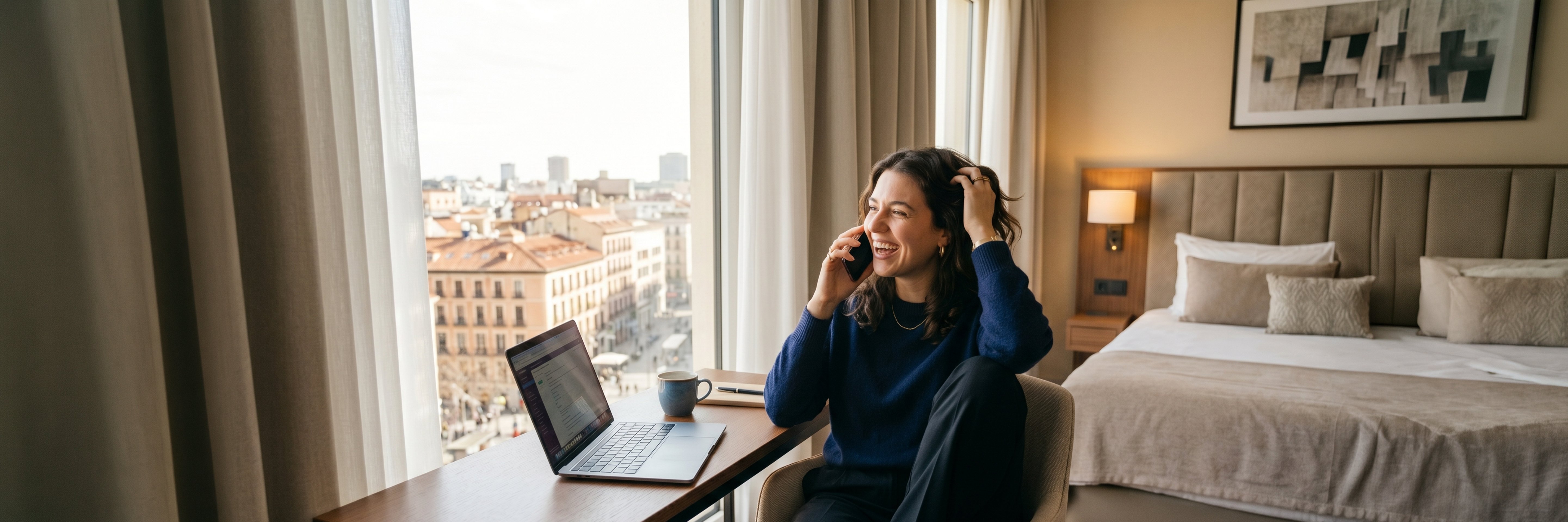
Some days, working “from anywhere” stops feeling flexible and starts feeling draining: constant background noise, an uncomfortable chair, calls on a headset with interruptions, and a battery that dies right when you need things to be steady. But remote work is meant to do the opposite - help you manage your energy, stay focused, and keep the day feeling more balanced, especially as flexible schedules become more common.
That’s where a day use hotel room can be a genuinely practical option. Not as a luxury, but as a reliable setup: a quiet room, a door that closes, and a stable base for a few hours. Work feels simpler and more controlled. And if the hotel offers it, the “after” can be part of the plan too: a quick spa or pool break to unwind, or a business lunch in the restaurant so you can meet a client or colleague without adding extra travel and wasted time.
The need people don’t always say out loud: working well without feeling boxed in
Many people say they just need “a place to work”. What they really need is continuity - time to get things done without constantly negotiating with the environment. Remote work only feels truly flexible when the space supports it: privacy when a call matters, quiet when focus matters, and a dependable base when the day is split between meetings, travel, and last-minute changes.
That’s why day use isn’t a replacement for coworking - it’s simply a different option, and often a better fit when discretion matters or when you need a solid hour of deep focus rather than a shared desk. And “more enjoyable” doesn’t mean frivolous. It means more sustainable: less friction, less stress, and a smarter way to manage the day - especially if working from home has blurred the line between work and personal life.
How it works (and why it suits remote work)
With day use, you book a specific daytime time slot that fits your schedule. You arrive, check in, the room is ready, and you use it as your work base for the hours you booked. Then you check out at the end of the slot. In practical terms, you pay for a few hours of room use without booking an overnight stay. It’s efficient when you need stability right away - with no settling-in time and no need to improvise.
If the hotel offers additional facilities, the experience can extend beyond work: a shower to reset, a spa or pool break as a measured reward, or the restaurant as an easy setting for a business lunch or a post-call pause that still feels professional.
When it makes sense compared to other options
It makes sense when the goal isn’t just “somewhere to sit”, but less friction and higher quality: when privacy is essential, when your timing is tight, or when you want a base that feels like yours - even for just two hours. Coworking can offer shared energy and a social atmosphere. A hotel room offers control: quiet, privacy, and the ability to treat the day as one clean block (work + break + continue), especially when your schedule is fragmented.
Real situations where day use can help
A sensitive call or interview: full privacy, no surprises
Context: you have an important video call and want to avoid noise, people walking past, or interruptions that force you to manage the surroundings instead of the conversation.
Day use solution: book a room for a few hours, check in, close the door, and take the call in a truly private setting.
Two hours of deep focus: finishing a task without distractions
Context: writing, reviewing, preparing a deck, or finalising a proposal - work that’s easier when the environment isn’t competing for your attention.
Day use solution: a quiet room becomes a temporary focus space - often more effective than repeated attempts in shared areas.
Between meetings: a flexible base in town
Context: you have appointments in different locations and a 3–4 hour gap that can quickly become wasted time if it isn’t managed well.
Day use solution: use the room as your base to work, charge devices, freshen up, and keep momentum - without improvising.
Work & reward: finish the call, then spa or pool
Context: it’s been a demanding day and you want to end it well without creating a second logistical plan.
Day use solution: work in the room, then - if available - use the spa/pool to unwind right away, making the break part of a sustainable day rather than an unnecessary extra.
Business lunch without wasted time: the restaurant as an extension of work
Context: you want to meet a client or colleague in a comfortable, organised setting without last-minute stress.
Day use solution: the room is your base before/after, while the restaurant supports the relationship side in a professional, efficient way.
A mid-day reset: bathroom and shower to feel presentable again
Context: heat, rain, a workout, or a day of travel - you need to refresh before your next time block.
Day use solution: room + private bathroom. A quick shower becomes a fast but complete reset, helping you continue with better energy.
FAQ
Is coworking or a hotel room better for remote work?
It depends on your goal. Coworking is useful for shared space and social energy. A hotel room is better when privacy, quiet, and time control matter most.
Can I take a call without noise and interruptions?
In a hotel room, yes - because you have a closed, private space. Choosing a slot with some buffer also helps avoid check-out stress.
Can I use the bathroom and shower even if I stay only a few hours?
Usually, yes, because it’s part of the room. If it’s essential for you, check the booking details.
Can I combine work and spa/pool on the same day?
It may be possible if the hotel offers these facilities and they’re accessible during your time slot. Check availability and whether access is included or extra.
Does it make sense for remote work that feels “more enjoyable”?
Yes - if “more enjoyable” means changing scenery, breaking routine, and ending the day with a measured reward: a good lunch, the pool, the spa, or simply a better place to work without interruptions.